TORONTO — Ontario's 2026–2030 municipal councils took office on Nov. 15, and inaugural meetings are running through December. The Oct. 26 vote returned the mayors of Toronto and Ottawa but turned out incumbents in several of the province's larger cities. The new term brings a consistent provincial appointment process for eight regional and county heads of council.
Two provincial changes frame the term. Under the Better Regional Governance Act, 2026, Ontario has selected the heads of eight upper-tier governments. Strong-head-of-council powers were extended to those governments on Nov. 15. Ontario Regulations 189/26 and 190/26 also mean designated mayors and chairs cannot formally propose their 2027 budgets until 2027.
Big-city mayors
Toronto: Olivia Chow won a second term with 532,201 votes to Brad Bradford's 404,013. Council opened its first meeting on Nov. 18 and elected Ausma Malik as Speaker and Shelley Carroll as Deputy Speaker. The City scheduled the meeting to resume Nov. 19. Chow has pledged property-tax increases at or around inflation for at least 2027, CBC News reported.
Ottawa: Mark Sutcliffe was sworn in Nov. 16 after winning 139,354 votes (44.65 per cent). "The election campaign is over now, and our residents expect us to work together," he told council. He has promised to cap tax increases for 2027 and 2028; CBC reported the cap as 2.5 per cent.
Mississauga: Alvin Tedjo, the Ward 2 councillor, beat incumbent Carolyn Parrish and former mayor Bonnie Crombie with 74,479 votes (39.21 per cent). His first act on Nov. 16 was a directive to staff to work toward a zero per cent increase in the City's 2027 and 2028 budgets.
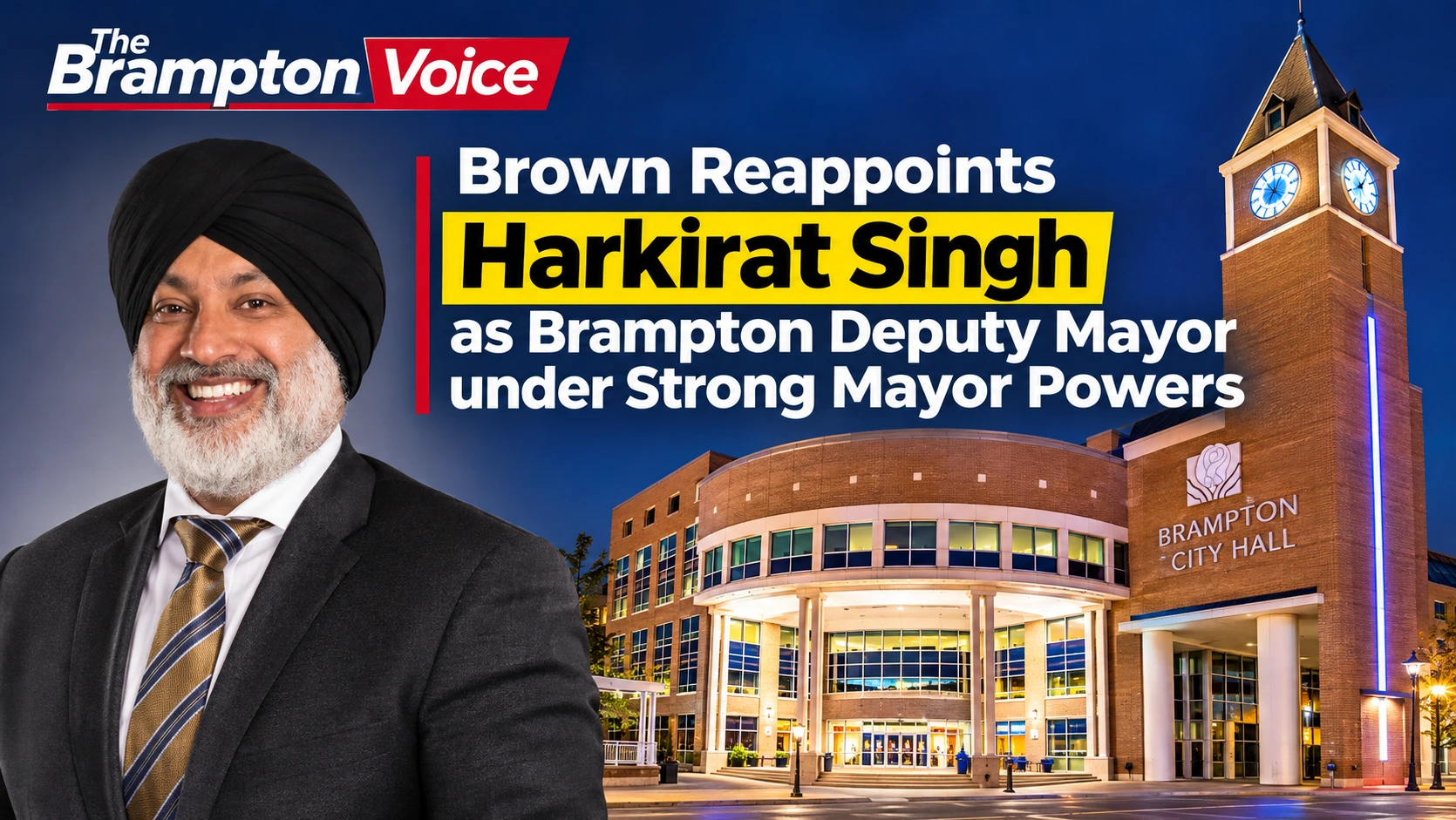
Brampton: Patrick Brown won a third term with 54.90 per cent of the vote.
Hamilton: Keanin Loomis defeated Andrea Horwath. The City's certified results list Loomis as mayor. CBC reported that eight new councillors would join him, and the City scheduled the inaugural meeting for Nov. 18 at 6:30 p.m.
London: Josh Morgan was re-elected with 46,405 votes (45.42 per cent), according to the City's official statement of votes.
Windsor: Fred Francis unseated Drew Dilkens. CBC's election-night report listed 28,204 votes, or 47.64 per cent, for Francis; AM800 subsequently reported the certified win. Francis campaigned on a pledge to stop using strong-mayor powers, CBC reported.
Vaughan, Markham and Barrie: Steven Del Duca, Frank Scarpitti and Alex Nuttall were returned.
Notable upsets
Mississauga: Parrish finished second, about 22,600 votes behind Tedjo.
Hamilton: Horwath, mayor since 2022 and a former MPP, lost after one term.
Windsor: Dilkens conceded to Francis on election night.
Kingston: Former Sydenham District councillor Conny Glenn defeated Bryan Paterson. The City announced Glenn's official election on Oct. 27.
Niagara Falls: Jim Diodati lost to Lori Lococo, 14,058 votes to 11,401, according to the City's results.
Halton: Gord Krantz, mayor of Milton since 1980, lost to George Minakakis. In Oakville, Rob Burton finished third behind Jeff Knoll.
Waterloo Region: In Cambridge, Scott Hamilton took about 56 per cent of the vote and incumbent Jan Liggett finished third, CBC reported. In Waterloo, Shannon Weber beat Mayor Dorothy McCabe with 52 per cent, reversing their 2022 result.
Toronto and Ottawa councils: In Toronto, Speaker Frances Nunziata and TTC chair Jamaal Myers lost their seats. In Ottawa, Kanata South's Allan Hubley was the only incumbent defeated.
Not every change was an upset. In Guelph, Coun. Leanne Caron succeeds Cam Guthrie, who did not run again. In Welland, Pat Chiocchio succeeds Frank Campion.
The appointed chairs
On Nov. 10, Municipal Affairs and Housing Minister Rob Flack announced eight appointed heads of council. Their inauguration dates are separate from the Nov. 15 extension of strong-head-of-council powers:
Peel: Nando Iannicca, reappointed. Regional council's inaugural meeting is Nov. 19.
York: Vaughan Mayor Steven Del Duca, who stays on as mayor. Inaugural meeting Nov. 26.
Durham: Pickering Mayor Kevin Ashe, also staying on as mayor. He was sworn in as chair Nov. 17.
Halton: Ann Mulvale, a six-term former Oakville mayor and past AMO president. Inaugural meeting Dec. 9.
Niagara: Frank Campion, the outgoing Welland mayor, who had served since 2014. He leads a council made up of the 12 local mayors plus the chair; the elected regional councillor seats have been removed.
Waterloo: Scott Davey, described in the province's Nov. 10 backgrounder as a Kitchener councillor since 2010 and chair of that city's finance committee.
Simcoe County: Don McIsaac, Orillia's outgoing mayor. The warden title has become County Chair, council has shrunk from 32 to 17 members, and the inaugural meeting is scheduled for Dec. 8.
Muskoka: Parry Sound–Muskoka MP Scott Aitchison. The province's Nov. 10 backgrounder said he intended to resign his Commons seat by the end of November and be sworn in Dec. 1.
The province says the chairs will support responsible growth and efficient services. Under the usual annual-budget rules, the head of council must propose a budget by Feb. 1. The default sequence gives council 30 days to amend it, the head 10 days to veto amendments, and council 15 days to override by a two-thirds vote of its members. The rules allow those periods to be shortened; if the head misses the proposal deadline, council prepares and adopts the budget.
The rules shaping 2027 budgets
Budget timing. Ontario Regulation 189/26 amends the strong-head-of-council regulation under the Municipal Act, while 190/26 does the same for Toronto under the City of Toronto Act. A budget for the year immediately following a regular election can be formally proposed only in the year to which it applies. Staff preparation and public consultation can still take place beforehand.
Police costs. Several forces' budgets and forecasts show pressures that new councils will have to examine:
Ottawa police proposed about $44 million more from the 2027 tax levy, roughly an 11 per cent police-levy increase. This was a budget request, rather than an approved increase in the whole municipal tax bill.
A June 30 report from The Niagara Independent described a 14.8 per cent Niagara police forecast for 2027, following an 11.11 per cent increase for 2026. The dated forecast should not be mistaken for a final 2027 budget decision.
CBC reported on May 8 that a proposed Durham police financing strategy could take the Region's overall 2027 property-tax increase to 9.02 to 10.52 per cent. That was a conditional forecast, rather than an adopted 2027 tax rate.
Peel Regional Police's 2026 budget page lists an $837.3-million operating budget and describes a 9.9 per cent increase.
Freeze pledges. Tedjo's target applies to Mississauga's City tax-supported budgets. Regional property taxes and utility charges are separate. Sutcliffe's tax cap, Chow's inflation pledge and Barrie's 2026 zero per cent City operating increase, with a two per cent infrastructure levy, must each be considered alongside the costs of services and other charges.
What taxpayers should watch
January to Feb. 1, 2027: formal strong-mayor and strong-chair budget proposals, followed by council amendments and any vetoes under the prescribed process.
Whether Windsor's Francis follows through on not using strong-mayor powers.
Police budget votes in Ottawa, Niagara, Durham and Peel.
How dual-role chairs Del Duca and Ashe balance their city and regional responsibilities. Holding both roles does not itself establish a legal conflict of interest.
Muskoka's Dec. 1 swearing-in and Halton's Dec. 9 inaugural.
Sources
CBC Hamilton, "New term of council begins in Hamilton" (Nov. 16, 2026)
Compass News, Barrie 2026 operating budget and infrastructure levy
Feature image: AI-generated conceptual illustration of a ballot box, papers and an Ontario-style townscape; not a photograph of an actual place, person or event.