
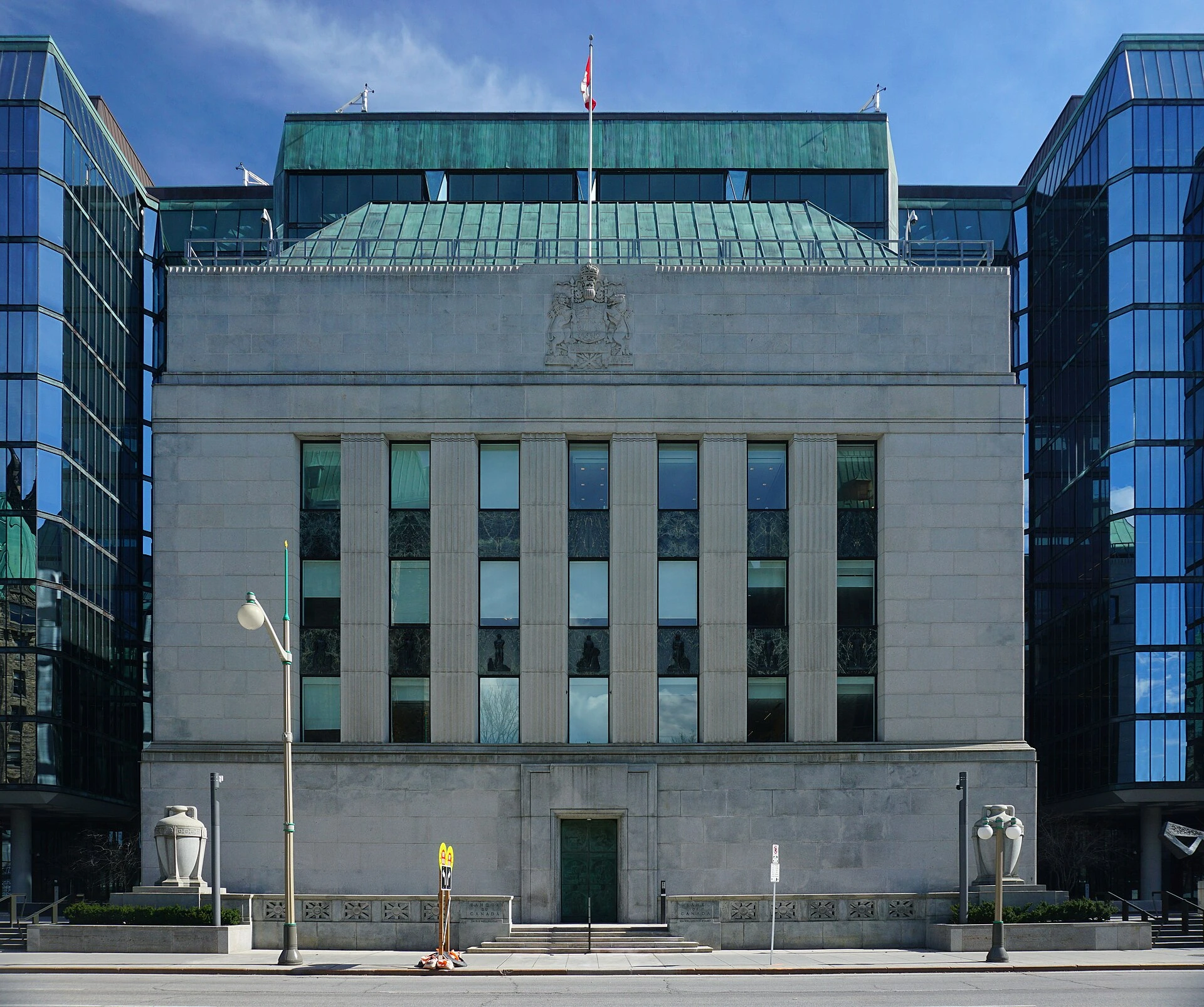
The Government of Canada and the Bank of Canada have renewed the country's monetary policy framework for another five years, reaffirming the 2% inflation target as the central bank's policy objective.
The joint renewal, announced in November 2026, follows the two parties' practice of reviewing and renewing the framework every five years. The Bank of Canada then independently conducts monetary policy to achieve the framework's goals.
The framework, in place in one form or another for more than 30 years, kept the same headline number despite a turbulent stretch that included post-pandemic supply chain disruptions, rapid shifts in demand and geopolitical conflicts that drove up inflation worldwide, including in Canada.
A difficult period, but a framework that held
During the recent period of elevated inflation, the Bank of Canada raised interest rates forcefully to restore price stability. While the adjustment was difficult for households and businesses, the policy response returned inflation to the 2% target and within the 1% to 3% control range, according to the joint statement issued by the Bank of Canada and the federal government.
The statement said the episode "underscored that high inflation imposes significant costs on households and businesses, eroding Canadians' purchasing power and their sense of the fairness of our economic system."
The Bank of Canada has assessed the recent period and concluded the high-inflation episode was not a failure of the framework's design, but a challenge to its implementation amid extraordinary global shocks. In response, the central bank says it has strengthened its analytical capacity to better assess how global and domestic supply-side shocks transmit to Canadian inflation, and how policy should respond when such shocks are larger and more persistent than normal.
Why the 2% target stays
The renewal comes as Canada's economy faces what the statement describes as profound change and heightened geopolitical uncertainty. International trade patterns are being redrawn, supply chains are being reconfigured, and global investment flows are shifting.
Demographic shifts and the widespread adoption of artificial intelligence are also cited as structural forces that will continue to alter the Canadian economy in the years ahead.
Against that backdrop, both parties agreed the best contribution monetary policy can make to Canadians' well-being is to maintain low, stable and predictable inflation.
The statement says price stability protects the purchasing power of households, allows businesses to plan and invest with confidence, supports maximum sustainable employment and economic growth, and fosters a stable financial environment.
The 2% target has "served Canadians well for more than three decades and is a clear and credible anchor for the Bank's monetary policy decisions," the joint statement from the Bank of Canada and the Government of Canada said.
Under the renewed framework, monetary policy will maintain a primary focus on keeping inflation low and well anchored, while allowing for flexibility in implementation to support economic growth and strong and stable labour market outcomes.
For Canadian households and businesses in Ontario and across the country, the renewal signals that the central bank's approach — and its definition of success — will not change through the next five-year term: inflation held near 2%, even as the economy around it keeps shifting.