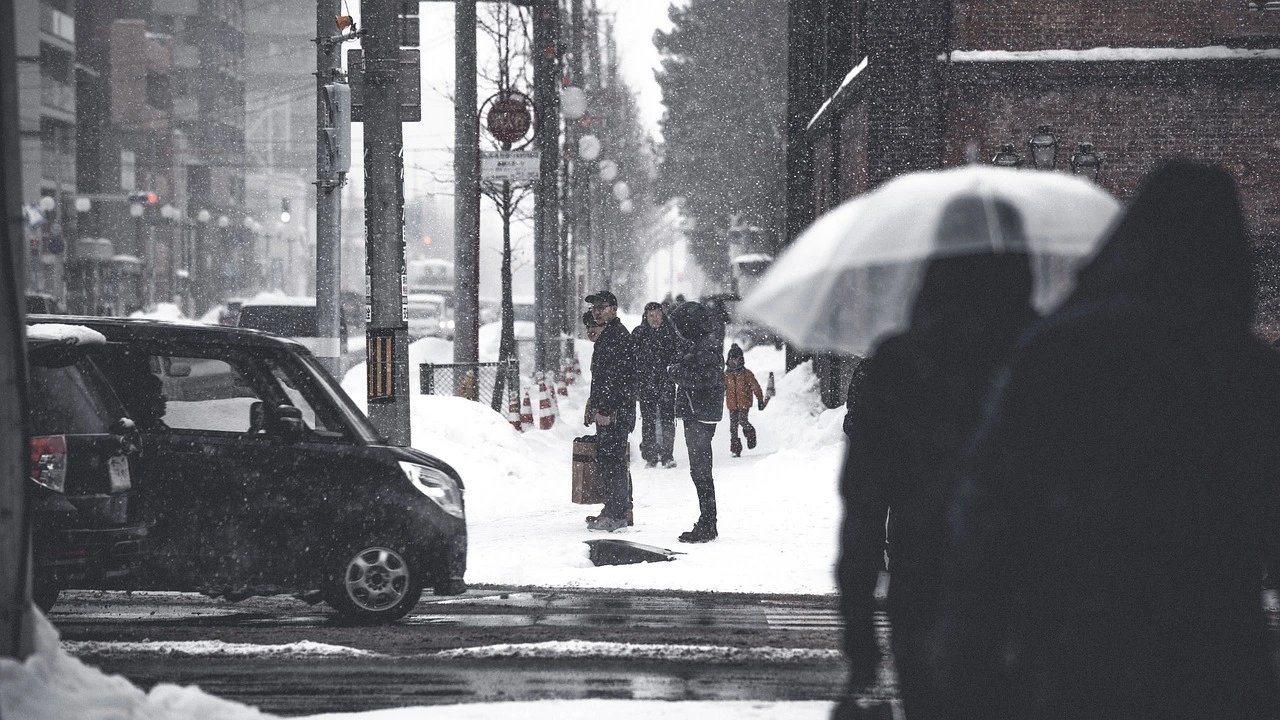
Simcoe County residents who feel like it has barely stopped snowing since November are not imagining things — but Environment Canada says relief is on the way.
As of Jan. 5, Barrie had received roughly 210 centimetres of snow since November, according to David Phillips, a climatologist with Environment and Climate Change Canada. That works out to about 80 per cent of the city's average annual winter snowfall of 265 centimetres.
Looking back 42 days from Jan. 5, Phillips said snow fell on 34 of them — meaning only eight days without at least a trace of snow.
"We still have a lot of winter to go," he told BarrieToday, "but it's not as if we have winter misery, cold and snowy."
Why so much snow?
Phillips pointed to Ontario's warmest fall on record as the culprit. Warm lakes meant that any outbreak of cold air was primed to generate lake-effect snow off Georgian Bay.
"We really had the warmest fall on record in Ontario, and in the Barrie area I'm sure that was the situation, so the lakes were very warm," he said. "And you just knew there was a possibility that any cold air that came would really turn on that lake-effect snow."
The pattern turned severe over the final days of December. From Dec. 29 to 31, more than 60 centimetres fell on Barrie, forcing the cancellation of the city's New Year's Eve celebrations.
The heavy holiday-season weather was a mixed blessing for local recreation, Phillips said, noting that while snow is good for the winter economy, poor roads at times made it risky to travel to ski resorts.
A thaw — and a warmer forecast
Despite all the snow, temperatures have actually been unremarkable. As of Jan. 5, Barrie had not recorded a single day below -20 C, Phillips said, while a typical winter brings at least three or four days that cold.
This week's January thaw, he added, should help bring snow levels down and make driving easier — a welcome break for both motorists and snow-removal crews who have been, in his words, "taxed to the nth degree."
"Our models suggest January and February are going to be a little warmer than normal," Phillips said.
"The second half of winter won't be as snowy. Our models are saying warmer than normal," he said.
More winter ahead
Phillips also noted that winter only officially began Dec. 21, so the season is barely three weeks old. He pegs Jan. 23 and 24 as the dead of winter for Barrie — the halfway point where there is more winter behind than ahead.
"We're almost used to it, but we're fed up with it, too," he said.