A Brampton citizens group is calling on residents to put the environment on the ballot in this year's municipal election, as new staff reports show the city's main climate plans remain roughly half-finished and its corporate emissions are higher than they were 15 years ago.
Steve Papagiannis, a board member with the Brampton Environmental Alliance, said many residents he speaks with believe the city has bigger problems — housing, sprawl and strained infrastructure among them. Brampton is now Ontario's third most populous city, with 791,486 residents and roughly 100,000 added since 2020, according to Statistics Canada.
"But we can't let the environment disappear entirely from the agenda," Papagiannis told The Pointer.
The city declared a climate emergency in June 2019, then endorsed its first Community Energy and Emission Reduction Plan (CEERP) at a Committee of Council meeting on Sept. 23, 2020. The plan calls for cutting community-wide energy use and emissions by at least 50 percent from 2016 levels by 2041, with a pathway toward an 80 percent reduction by 2050, and retaining an estimated $26 billion in cumulative energy costs within the community.
At its May 20 meeting, council received an update on CEERP and the 10-year Brampton Grow Green Environmental Master Plan. Staff reported about 25 percent of CEERP actions are complete with 50 percent ongoing, while roughly 30 percent of the master plan's actions are done and 40 percent are underway. Waste-related actions are lagging, with staff blaming a decentralized system in which different departments run their own diversion programs.
The latest staff report did not say whether the city is on track to meet its emissions targets, according to The Pointer. A June 2024 presentation to Brampton's Environmental Advisory Committee showed the city's corporate emissions were 1.7 percent higher than in 2010, with the city's total footprint measured at 3,971,168 tonnes of carbon dioxide equivalent. Transportation was the largest source.
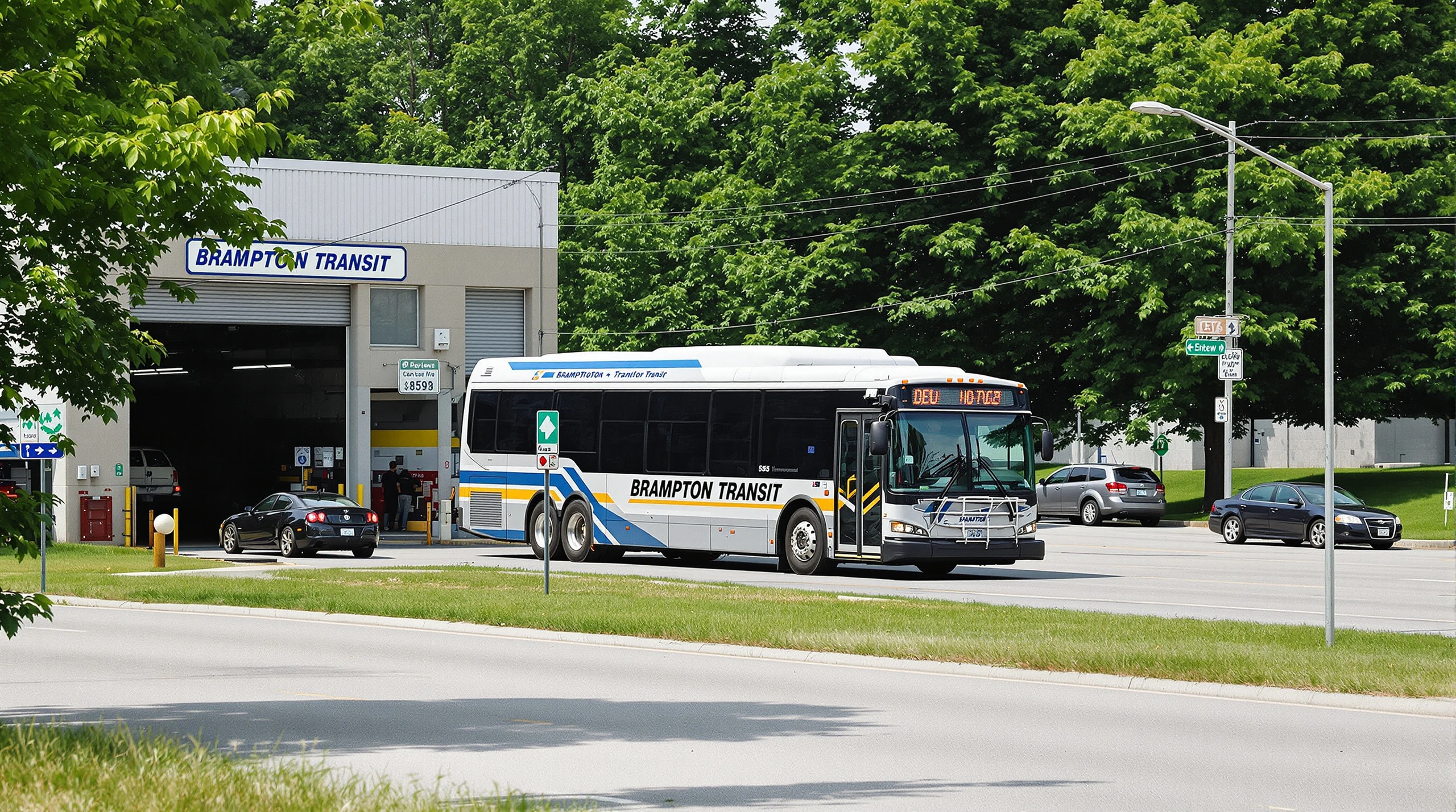
About 70 percent of the city's operational emissions come from the diesel-powered Brampton Transit fleet. The city has completed a transit network electrification study, endorsed a zero-emissions bus rollout strategy, and secured Canada Infrastructure Bank funding to buy up to 450 zero-emission buses by 2027. But the 2026 capital budget includes only $90,000 for the environmental master plan's implementation, with no funding assigned for 2027 or 2028.
"There are also some tightened budget constraints that may limit our capacity," Pam Cooper, the city's environmental planning manager, told the Environment Advisory Committee on June 2. She noted many major initiatives depend on inconsistent external funding that increasingly requires municipal matching dollars.
Transparency questions also continue to hang over the city's $4 billion fleet electrification deal with U.K.-based Zenobē, announced June 15, 2024, and an $11 million agreement with private transit operator Argo. The Pointer reported its freedom-of-information requests on both deals returned heavily redacted documents.
"As a resident, I don't understand how we're going to do a $4 billion deal and we have a thousand electric buses but it still says we're waiting for funding," Brampton resident Sylvia Roberts said at the May 20 meeting. "There's a lot of moving pieces … I spent 20 hours trying to figure this out and I cannot figure this out."
Brampton Transit ridership fell 13.1 percent in 2025, which the city links to changes in federal immigration policy and declining international student enrolment. Both the environmental master plan and the climate action plan are due for five-year reviews, with work on those updates beginning this year.