
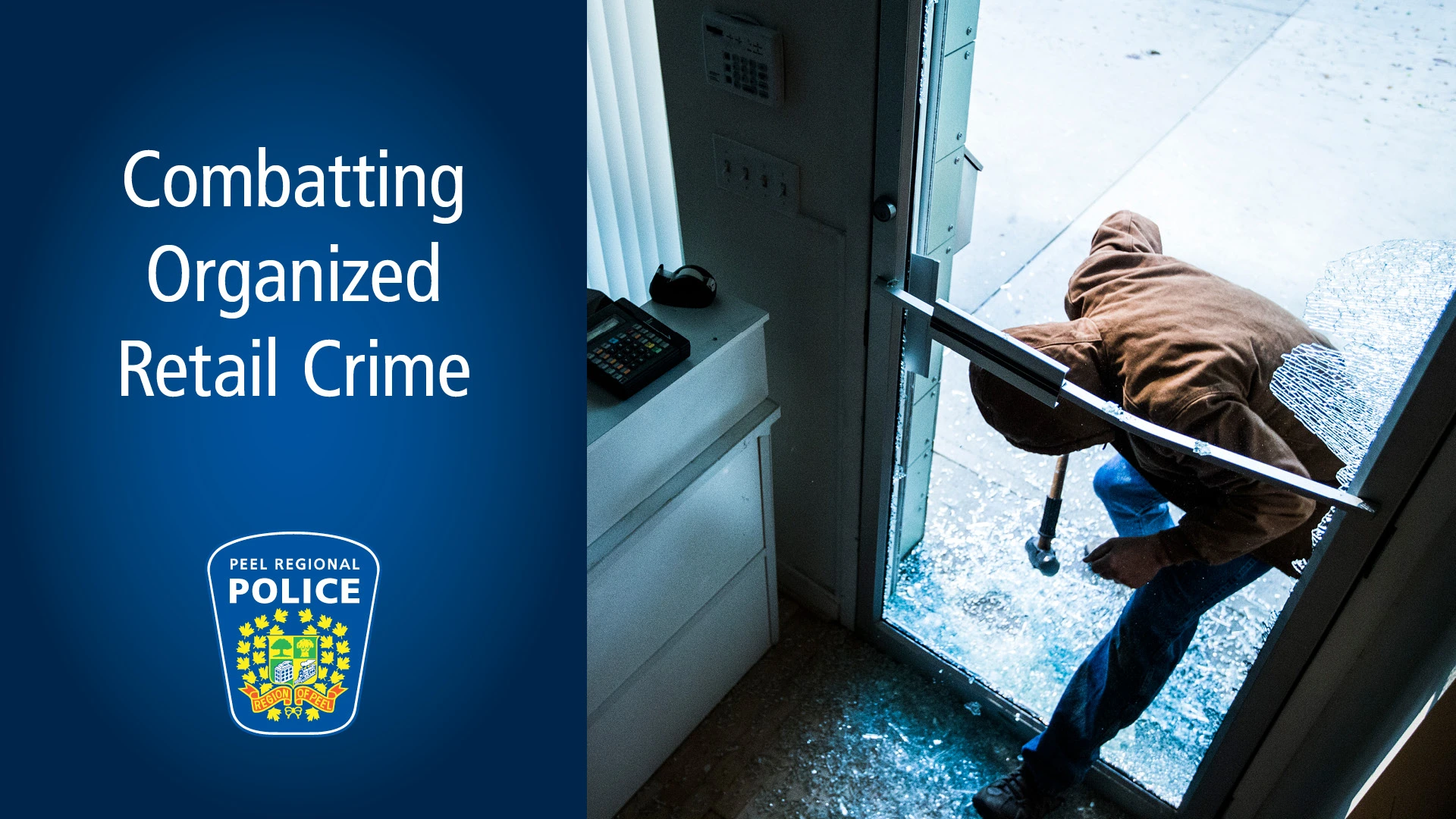
Brampton is included in a planned 2027 expansion of Peel Regional Police’s specialized property crime and retail theft team, extending a model first introduced in Mississauga to every police division.
Peel Regional Police said the Break and Enter, Auto and Retail unit, known as BEAR, has made 53 arrests, laid 263 charges and recovered more than $1 million in stolen property connected to retail theft since spring 2026.
The service announced the planned expansion alongside details of its Retail Organized Crime Conference, scheduled for Oct. 6 and 7 in Mississauga. The gathering brings together police agencies, retail industry leaders and public safety partners from across Ontario.
BEAR began as a pilot project in Mississauga in September 2025, initially focusing on break-and-enters and auto theft. Police said its work broadened after investigators identified a need for a team dedicated to organized retail crime.
The proposed expansion would bring that enforcement approach to both Brampton and Mississauga. Police described the unit’s work as intelligence-led and pointed to its retail theft arrests and property recoveries as reasons for extending it across the service.
Police and retailers coordinate enforcement
Peel police also reported results from their partnership with the Retail Council of Canada’s Organized Retail Crime Task Force and participation in the national Retail Blitz program.
That partnership has resulted in 63 arrests, 158 charges and the recovery of more than $29,000 in stolen property so far in 2026, according to police. The release presented those figures separately from the BEAR unit’s results.
The Mississauga conference will include panel discussions, keynote speakers and technology partners. Police said the aim is to develop practical responses and improve coordination across industries and policing jurisdictions.
In the police release, Deputy Chief Marc Andrews said organized retail crime affects businesses and consumers and generates profits that support other criminal activity. He said the unit’s evolution reflects changes to enforcement in response to community needs.
Rui Rodrigues, the Retail Council of Canada’s executive advisor for loss prevention and risk management, said organized retail crime puts pressure on businesses and threatens retail employees’ safety. He pointed to the BEAR unit and Retail Blitz partnership as examples of cooperation between police and the industry.
Paul Pedersen, executive director of the Ontario Association of Chiefs of Police, said the issue increasingly crosses jurisdictional boundaries. He called for a province-wide approach centred on lawful intelligence-sharing, closer coordination with retailers and support for investigations and prosecutions.


